
18–31 August 2027 • Selwyn College, Cambridge
Faculty and teaching
Our teaching method, Learning by doing, was developed at Cambridge for our own economics students. It is built on cognitive science (worked examples, guided practice and continuous feedback) and has won international awards, including a QS Reimagine Education Award chosen from over 1,600 entries in 94 countries. Here, you are taught by the Cambridge academics who created it and use it every term.
-
Method
Learning by doing
Built on cognitive science, used with our own Cambridge students
-
Awards
Teaching awards
Recognised by QS, the European Economic Association and Cambridge
-
Teachers
Cambridge academics
Eight who teach Cambridge students, one for each course
-
Feedback
Daily feedback
On your own code and analysis, from your teachers
Meet the faculty
Eight Cambridge academics, one for each course. Select a profile to read their biography.
-

Teaching Associate
-
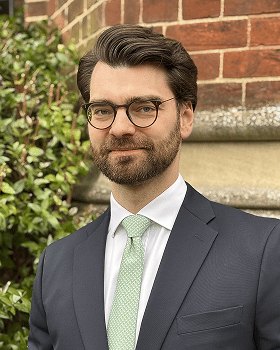
Associate Professor
-

Assistant Professor
-
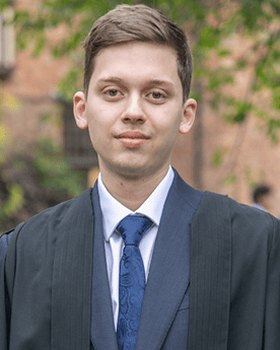
Teaching Associate
-
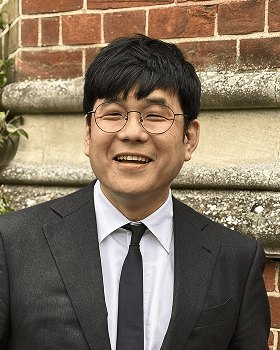
Associate Professor
-
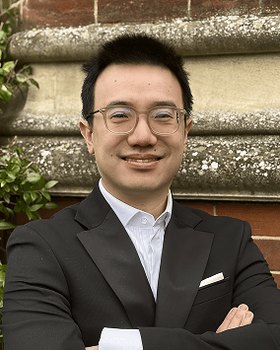
Assistant Professor
-
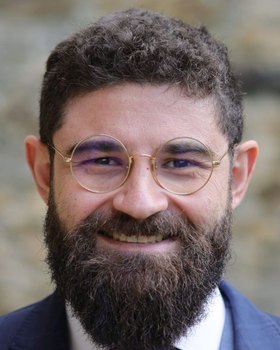
Associate Professor
-
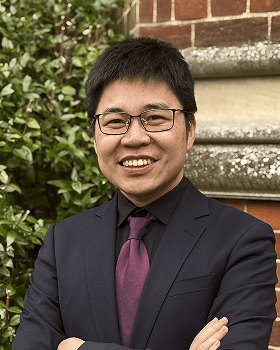
Associate Professor
How we teach
Learn it in the morning. Use it in the afternoon.
This is Learning by doing, the award-winning teaching method we developed at Cambridge. Each day has one goal: you see a new method in the morning, practise it with guidance, and by the afternoon your team can use it independently in your project.
-
Morning · lecture
We show it
An instructor explains the theory, then applies it to data with code, step by step, so you see exactly how it works.
-
Morning · practice class
You practise it, with guidance
You apply the same method, with almost the same code, to a new structured dataset, with an instructor on hand to guide you.
-
Afternoon · team project
You use it independently
Your team of three applies it to unstructured data to answer your research question, with AI as your coding partner and every decision your own.
-
Every day
You build on it
Tomorrow the loop starts again with a new method, so your project grows until your team presents it on the last day.
Teaching awards
-

-

-

-
-

-

-

Cambridge Excellence Awards
-
Teaching and Learning Innovation Award
What our 2026 students say
-
“Cambridge has a strong academic atmosphere, and the teachers really respect students. They’re very patient: they come round our group desks to check whether we have problems, and we can talk to them one on one.”
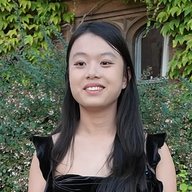 Yifei JiangEconomics and Finance, Year 2Xi’an Jiaotong-Liverpool University
-
“We have three hours of lectures and classes in the morning, then project work in the afternoon. My Cambridge Director of Studies runs our lectures. He’s great; he teaches really well!”
 Lewis RedmanEconomics, Year 1University of Cambridge
-
“The biggest difference is the teaching style. At many Chinese universities, the teacher lectures and the students listen. Here the classes are small and really interactive, with a lot of freedom, and that makes you think more critically.”
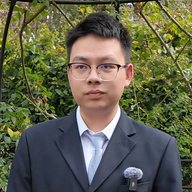 Changhua QuanEconomics, Year 3Nanjing University
18–31 August 2027 • Selwyn College, Cambridge
Ready to join us?
From £4,900 with tuition, college room and events
- Priority deadline1 January 202710% off
- Early-bird deadline31 March 20275% off
- Final deadline30 June 2027
I liked the project most, because that’s where you learn the most: you work things out for yourself and guide yourself to the finished product. It lasted only two weeks, so we pushed ourselves and got there faster.
 Rokas ValuckasEconomicsYear 1 · University of Cambridge
What you need
- Aged 18+Students and graduates
- MathematicsBasic calculus and probability
- EnglishIELTS 6.5 or equivalent
- GPA3.2 / B+ recommended
Not ready yet?
Download our brochure to find out more
Or message us on · .