
18–31 August 2027 • Selwyn College, Cambridge
Frequently asked questions
Answers to the questions applicants ask most, from entry requirements and fees to visas and life in college.
Applying
Who can apply, what you need and how the process works.
When does the Summer School take place?
The programme takes place in the summer of 2027. A one-week online prep course in core mathematics, statistics and coding in Python takes place on 5–9 July 2027, followed by the two-week residential programme at Selwyn College, Cambridge, on 18–31 August 2027.
Who can apply?
You must be at least 18 years old by the start of the programme. The programme is aimed at ambitious undergraduate and early postgraduate students, as well as recent graduates and early-career professionals with suitable academic backgrounds, who want to build strong quantitative and analytical skills in data, economics and finance. We welcome applicants from economics, business, finance, econometrics, data science, machine learning, AI, applied mathematics, statistics, engineering, computer science and related fields.
Exceptionally advanced high-school students may apply only if they meet the age requirement and academic criteria.
What are the academic entry requirements?
We recommend a minimum GPA of 3.2 / B+ (or equivalent). All courses assume basic calculus and probability. Foundations courses assume no statistics, programming or prior study of the subject; Advanced courses also assume linear regression, basic matrix algebra and some Python. Courses are designed for students with academic interests in quantitative fields such as economics, business, finance, econometrics, data science, AI, mathematics, statistics, engineering and computer science.
Do I need mathematics or coding experience?
You need a basic understanding of calculus and probability. Coding depends on your course: Foundations courses need no coding experience, while Advanced courses assume some Python, as well as linear regression and basic matrix algebra. The online prep course refreshes all of these, and our step-by-step approach is designed to help you start confidently. You don’t need to be a programmer: in every course you write Python with an AI assistant, so you can focus on the method and what the results mean. In Advanced courses, your Python helps you read, check and improve the code you write with AI. Each Advanced course also has one requirement of its own, listed with the course on the Courses page.
What are the English language requirements?
Unless you have studied in English or lived in an English-speaking country, you will need to submit an English-language certificate. Accepted scores include IELTS 6.5, TOEFL iBT 90, CET-4 550 or CET-6 500.
How do I apply, and what do I need to submit?
You apply online via our application portal, which you can reach from the How to apply page. When you apply, you’ll choose one of our eight courses and your preferred accommodation at Selwyn College: a single room or a twin room shared with one other student.
You will normally need to submit the online application form, your latest university or college transcript (if available) and an English-language certificate (if required), plus your CV if you apply for a scholarship. We may ask for additional documents.
What are the application deadlines?
There are three application deadlines. Priority deadline, 1 January 2027: receive a 10% discount if you apply by this date. Early-bird deadline, 31 March 2027: receive a 5% discount if you apply by this date. Final application deadline, 30 June 2027: you must apply by this date to allow enough time to get a UK visa if you need one. Students who can travel to the UK without a visa may apply later, subject to availability. See the key dates.
Is there an interview?
Yes. Within two weeks of submitting your application, you’ll have a short online interview with one of our instructors. This is a friendly conversation about your academic interests and motivation, and an opportunity for us to understand your goals and how the programme can best support you.
When will I hear back?
After your interview, you can expect to hear our decision within one week. If successful, you’ll receive your offer letter shortly after, with full details on next steps: you accept your offer, pay the fees, then arrange your visa, travel and insurance. The online prep course follows on 5–9 July 2027, and the residential programme in Cambridge on 18–31 August 2027.
Can I change my course after I apply?
Course changes may be possible, subject to availability and academic suitability. If you wish to change, contact the Summer School admissions team as early as possible at globalcampus@cunjc.org.cn.
Fees and scholarships
What it costs, what is included and how to save.
How much are the fees?
| Student rate* | Standard rate | |
|---|---|---|
| Single room | £5,500 | £6,875 |
| Twin room | £4,900 | £6,125 |
* Student rate: for students currently enrolled at a university or college anywhere in the world. Standard rate: for everyone else.
Is there an application fee?
No.
Are there any discounts?
Yes. Applicants who submit their application by 1 January 2027 receive a priority discount of 10% on full programme fees, and those who apply by 31 March 2027 receive an early-bird discount of 5%.
Are there scholarships?
Yes. We offer a limited number of competitive scholarships of 5% of the full fees to students who apply by the early-bird deadline, 31 March 2027. They are awarded on a rolling basis, on academic merit and your overall profile, and can be combined with the priority or early-bird discount. To be considered, select the scholarship option in the application form and upload your CV.
What is included in the fees, and what isn’t?
Fees include tuition (lectures and practice classes) and team project supervision; an en-suite room at Selwyn College, daily breakfast and a formal dinner; keynote talks, career talks, leadership coaching and admissions workshops; and the social programme: a welcome event, drinks with speakers, tours of Cambridge and its colleges, punting on the Cam, a day trip to London and a graduation garden party.
They do not cover travel to and from Cambridge (including flights and transfers), visa and related application costs, travel or health insurance, meals other than breakfast and the formal dinner, or personal expenses and optional activities outside the official programme.
What is your refund or withdrawal policy?
The full terms and conditions, including payment, withdrawal and refund policies, are in the application form and will be attached to your application confirmation letter and your offer letter.
Courses and teaching
The eight courses, a typical day, the teachers and the team project.
What courses can I choose from?
The programme focuses on applied quantitative and analytical training in AI, Data Science, Economics and Finance. We offer eight courses, one Foundations course and one Advanced course in each subject. AI: AI101 Applied AI for Business and Management; AI201 Deep Learning and Large Language Models. Data Science: DS101 Data Science for Economics and Business; DS201 Machine Learning for Prediction. Economics: EC101 Macroeconomics in Theory and Practice; EC201 Microeconomics and the AI Economy. Finance: FI101 Financial Markets and Investment; FI201 Quantitative Finance with AI. All courses connect theory with practice, using real datasets and modern tools. See the Courses page for details of each course.
How many courses can I take, and how long is each one?
You take one course, which runs for the full two weeks of the residential programme.
Should I choose a Foundations or an Advanced course?
It depends on what you already know. Every course assumes basic calculus and probability; Advanced courses also assume linear regression, basic matrix algebra and some Python. If you have all four, choose Advanced. Otherwise, start with Foundations, which needs no statistics, coding or prior study of the subject. Each Advanced course also has one requirement of its own, listed with the course on the Courses page.
What does a typical day look like?
Each course has 60 contact hours over the two weeks: 15 hours of lectures, 15 hours of practice classes and 30 hours of team project work. Every weekday includes a 90-minute lecture, a 90-minute practice class and 3 hours of work on your team project.
You move from lectures and demos to hands-on practice in Python, working with real datasets. This is Learning by doing, the award-winning teaching method we developed at Cambridge: each day you see a new method in a lecture with a live coding demo, practise it with guidance in the practice class, then use it independently in your team project. The next day you build on it with a new method, so your project grows until your team presents it on the last day.
Your day starts with breakfast in college, and on some days there is an evening talk or event (keynote lecture, careers talk, leadership or admissions session). You will also have free time to relax in college, explore Cambridge or work on your project with your team.
How big are the classes?
Courses are taught Cambridge-style in small groups. Each course has up to 18 students, who attend every lecture and practice class together: a small group that allows interaction, discussion and close support. For the team project, they split into teams of three.
Who teaches on the programme?
Teaching is delivered by award-winning academics from the University of Cambridge, including members of the Faculty of Economics and fellows of Cambridge colleges. Many hold multiple teaching prizes and have extensive experience across mathematics, statistics, econometrics, data science, machine learning, microeconomics and macroeconomics. Meet them on the Faculty page.
What is the team project?
The team project is where you apply the tools and methods from your lectures and practice classes to real data and real questions. You work in a team of three on a single project across the two weeks, carrying each day’s material straight into it: you plan the approach, divide roles, analyse data, code solutions and prepare a presentation, with regular guidance from instructors and teaching assistants. You follow a research-style workflow, from framing the problem and analysing the data to interpreting and presenting the results.
Your team presents its work at a final project showcase on the last day of the programme. You leave with a portfolio-ready project that shows your technical skills, teamwork and communication: ideal to discuss in interviews or to include in applications to employers and graduate schools.
Will I code with AI?
Yes. In your team project you code with an AI assistant (sometimes called vibe coding): you plan the analysis, write the Python with AI’s help, then run, check and explain it. Lectures and practice classes make sure you understand the method and the code first, and we check your understanding in class discussions, short quizzes and, above all, your final presentation.
Which AI tools can I use?
Whichever you prefer: for example Claude, Codex or GitHub Copilot in VS Code, or a Chinese alternative. You won’t need them for the online prep course.
Is there a preparation course?
Yes. All students take a one-week online prep course on 5–9 July 2027 covering core mathematics, statistics and the basics of Python, so you know how to read and work with code. This ensures everyone arrives in Cambridge ready to engage with the material, regardless of their starting point.
Do I need to bring a laptop?
We strongly recommend bringing a laptop capable of running Python and the AI coding assistant you prefer, as you will work extensively with real datasets in lectures, practice classes and your team project. Most of your coding and project work will be done on your own device, with support from instructors and teaching assistants.
Will I receive a certificate or credit?
Yes. All students who successfully complete the programme receive an official certificate of achievement from the Cambridge University–Nanjing Centre of Technology and Innovation. Students with excellent performance may request a recommendation letter to support applications for master’s or PhD programmes.
Each two-week course is designed to be equivalent to a full-term Cambridge undergraduate course and is typically comparable to 3–4 US credits or 7.5 ECTS. Formal credit is not awarded by CUNJC; recognition and transfer are subject to approval by your home institution, but we provide detailed documentation to support this.
What will I gain from attending?
You will learn to use applied quantitative tools in Python, complete a portfolio-ready team project and receive a certificate of achievement; top performers can also request recommendation letters for postgraduate applications. You will also meet fellow students, Cambridge academics and industry speakers, and gain admissions and career insights from our professional development programme.
Life in Cambridge
Where you live, what you eat and what you do after class.
Where will I live?
The Summer School takes place in Cambridge, UK, at Selwyn College, one of the constituent colleges of the University of Cambridge, where you are taught, live and take part in many social activities. You stay in an en-suite room, either a single room of your own or a twin shared with one other student, with access to the same college facilities and welcoming community as full-time Cambridge students.
Can I share a twin room with a friend?
Yes. If you choose a twin room, you can ask to share it with a particular student; we arrange this closer to the start of the programme.
When do I arrive and leave?
Arrive on 17 August 2027, the day before the programme starts, and leave on 1 September 2027, the day after it ends.
What facilities and meals are included?
You will have access to the library, dining hall, chapel, gardens, sports grounds, common rooms and support from college porters and programme assistants. Daily breakfast is provided in the dining hall, along with a candle-lit formal dinner during the programme.
Can I arrange my own accommodation?
We strongly recommend staying at Selwyn College to benefit fully from the academic and social experience. If you wish to arrange your own accommodation in Cambridge, please contact the admissions team to discuss whether this is possible in your case.
What does the social programme include?
The social programme has six events: a welcome event, a guided walking tour of Cambridge and its colleges, punting on the River Cam, a candle-lit formal dinner with our speakers and your teachers, a day trip to London, and the closing garden party and graduation at Selwyn College. You also meet the speakers over drinks. These activities help you explore the city, experience college traditions and build friendships that last beyond the summer. See Life in Cambridge.
Talks and careers
Speakers, networking and help with your next step.
Who will speak, and can I meet them?
You’ll hear from global academic leaders, top executives in finance and AI, professional leadership coaches and Cambridge admissions officers. Keynotes are given by Cambridge academics from the Faculty of Economics, Judge Business School and other University departments, translating cutting-edge research into accessible ideas you can take straight into your studies and projects.
Drinks receptions and a formal dinner with speakers are built in, giving you relaxed time to ask questions, start real conversations and build connections.
What career and postgraduate support is there?
Career talks are panels and sessions with successful leaders and top executives in finance, data science and economics, sharing their journeys, decision points and how they think about today’s biggest industry challenges.
In the postgraduate applications workshop, Cambridge academics and admissions officers give insider advice on how applications are assessed, which selection criteria matter most and how to position your goals for master’s or PhD programmes. You also have dedicated time to ask questions and get personalised guidance on your own application and next steps.
What will I gain from leadership coaching?
In interactive workshops led by professional coaches, you’ll learn how to manage uncertainty, work effectively in diverse teams and strengthen your personal leadership style, building confidence, resilience and collaboration skills you can apply in study and work.
Visas
Whether you need a UK visa, and the help we give.
Do I need a visa to attend?
Depending on your nationality, you may need a UK visa or an electronic travel authorisation (ETA) to attend the Summer School: most visitors need one or the other. Check which you need on the UK government’s Check if you need a UK visa (opens in a new tab) page, and allow plenty of time for your application.
Will you support my visa application?
Yes. We provide a formal invitation letter for your visa application and, where needed, work with UK Visas and Immigration to support your application. We can also advise on the process from the programme’s perspective (though we cannot provide immigration advice). We are committed to supporting you with coursework, university life, social activities and visa-related queries so that you can make the most of your time in Cambridge.
About CUNJC
Who we are, and how to reach us.
What is CUNJC?
The Cambridge University–Nanjing Centre of Technology and Innovation (CUNJC) is the official University of Cambridge platform for collaboration in China, jointly established and supported by the University of Cambridge and the Nanjing Municipal Government. CUNJC focuses on research, innovation, technology transfer, training, and talent development, and supports international academic exchange between Cambridge and global partners.
The CUNJC Cambridge Summer School is an official programme of this University of Cambridge Centre, designed and delivered by award-winning Cambridge academics and hosted at Selwyn College. Unlike many college-based summer schools, it is run by a university centre, ensuring academic oversight, institutional recognition and direct involvement from Cambridge academics and admissions officers.
What sets the CUNJC Cambridge Summer School apart?
The CUNJC Cambridge Summer School stands out because it is an official programme of a University of Cambridge Centre, not a standalone or third-party summer school. It is designed and delivered by award-winning Cambridge academics and taught with Learning by doing, the evidence-based method we developed at Cambridge. The programme combines rigorous academic training, hands-on work with real data and team-based projects, ensuring you leave with portfolio-ready outcomes, not just lectures attended. Teaching and accommodation are based at Selwyn College, giving you a full collegiate Cambridge experience, while professional development (keynote talks, leadership coaching, postgraduate admissions workshops and structured networking with academics and industry leaders) supports your academic and career goals. Together, this makes the programme academically credible, highly applied and strongly outcome-focused, setting it apart from typical summer schools.
Who can I contact if I have more questions?
For any questions about applications, fees or practical arrangements, email us at globalcampus@cunjc.org.cn, message us on or , or . We reply within a day.
Our office is at the Cambridge University–Nanjing Centre of Technology and Innovation, Building A, Rongyue Road No. 23, Jiangbei New Area, Nanjing, Jiangsu, China.
18–31 August 2027 • Selwyn College, Cambridge
Ready to join us?
From £4,900 with tuition, college room and events
- Priority deadline1 January 202710% off
- Early-bird deadline31 March 20275% off
- Final deadline30 June 2027
We get up at about 8 a.m., go for breakfast, and then it’s lecture time. Then it’s project time, professors give us talks, and we also get the chance to visit every college in Cambridge.
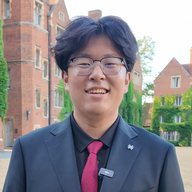 Zhiqian ChenInnovation and EntrepreneurshipYear 2 · Shandong University
What you need
- Aged 18+Students and graduates
- MathematicsBasic calculus and probability
- EnglishIELTS 6.5 or equivalent
- GPA3.2 / B+ recommended
Not ready yet?
Download our brochure to find out more
Or message us on · .